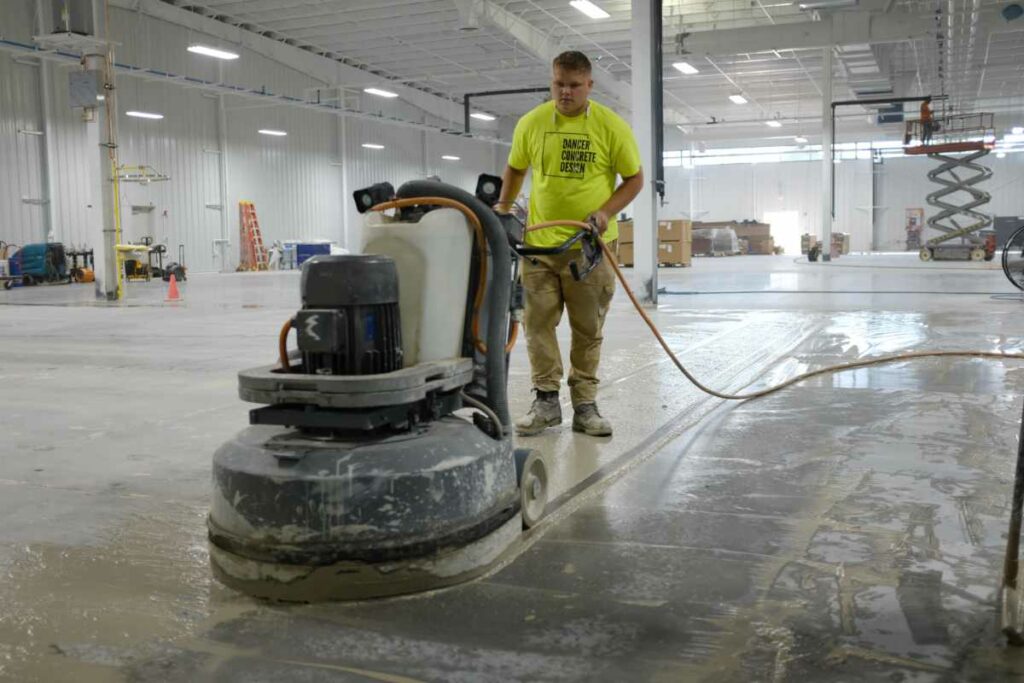
Concrete polishing has emerged as a preferred finishing technique for both residential and commercial spaces due to its durability, aesthetic appeal, and cost-effectiveness. The process involves mechanically grinding and polishing the concrete surface with the help of abrasives to achieve a desired level of shine and smoothness. This guide will delve into the various techniques used in concrete polishing, offering insights into best practices and expert strategies to achieve optimal results. Whether looking to enhance the appearance of a garage, showroom, or industrial floor, understanding these techniques is crucial for achieving a high-quality polished concrete finish.
Understanding the Concrete Polishing Process
The concrete polishing process is a multifaceted endeavor requiring precision and knowledge of materials. The following steps outline the basic process:
- Surface Preparation: Before polishing, the concrete surface must be prepared thoroughly. This includes cleaning, repairing any damage, and removing existing coatings if necessary.
- Grinding: The initial grinding phase removes imperfections and levels the surface. Coarse diamond abrasives are used to achieve this.
- Polishing: Progressively finer abrasives are employed to polish the surface, enhancing its durability and appearance. This stage defines the final gloss level.
- Sealing: A sealer is often applied to protect the surface from stains and moisture, extending the floor's lifespan.
Discover expert strategies here to effectively navigate these essential steps.
Choosing the Right Equipment and Materials
Grinding Tools
Selecting the appropriate grinding tools is crucial for a successful concrete polishing project. The choice depends on the condition of the concrete and the desired finish.
- Grinders: A range of grinders is available, from handheld models for small areas to large walk-behind machines for extensive surfaces.
- Abrasives: Diamond abrasives come in various grits and should be chosen based on the initial condition of the concrete. Coarser grits are used for initial grinding, while finer ones are for polishing.
Polishing Pads and Sealers
Polishing pads also vary in grit and material, affecting the final look of the polished concrete. Sealers protect the finished surface and can be water-based or solvent-based, each offering distinct benefits.
Explore advanced guides and tips on the selection of tools and materials here.
Expert Techniques for Optimal Results
Consistency in Polishing
Maintaining consistent pressure and speed during the polishing process is essential for achieving a uniform finish. Variations can lead to uneven surfaces and visible imperfections.
Addressing Imperfections
Not all concrete surfaces are perfect from the start. Addressing imperfections like cracks or stains before polishing is crucial to prevent them from affecting the final finish.
Find out more about this approach to handling surface imperfections here.
Regular Maintenance
Once the concrete has been polished, regular maintenance is essential to preserve its appearance and functionality. This includes routine cleaning and periodic reapplication of sealers.
Conclusion
Concrete polishing is a sophisticated technique that enhances both the aesthetic and functional attributes of a space. By understanding the detailed process, selecting the right equipment, and applying expert techniques, achieving a high-quality finish is possible. For those interested in implementing these techniques, learning about tailored solutions can be invaluable. Learn about our tailored solutions to ensure the best results in any concrete polishing project.
About the Author